---
title: "Beyond exclusion: What growers should consider when facing thrips"
description: Thrips pressure continues to evolve across many growing regions. Insect exclusion can influence airflow, humidity, and greenhouse climate. This article explores why managing thrips is also a climate decision.
image: https://knowledge.ludvigsvensson.com/hubfs/Banner_August_blog_2026.png
---
- [Svensson Group](https://www.ludvigsvensson.com/en-gb)
- [Climate Screens](https://www.ludvigsvensson.com/en-us/climate-screens)
- [INTERIOR TEXTILES](https://www.ludvigsvensson.com/en/interior-textiles)
[](https://www.ludvigsvensson.com/en-us/climate-screens)
[](https://www.ludvigsvensson.com/en/checkout/)
Menu
-
- [Products](https://www.ludvigsvensson.com/en-us/climate-screens/product-portfolio)
- [Grower stories](https://www.ludvigsvensson.com/en-us/climate-screens/grower-stories)
- Insights
- [Crop tips](https://www.ludvigsvensson.com/en-us/climate-screens/crop-cultivation-tips)
- [Climate challenges](https://www.ludvigsvensson.com/en-us/climate-screens/climate-challenges)
- [Maintenance](https://www.ludvigsvensson.com/en-us/climate-screens/installation-maintenance/climate-screens-maintenance)
- Installation
- [Highlights](https://www.ludvigsvensson.com/en-us/climate-screens/highlights)
- [Contacts](https://www.ludvigsvensson.com/en-us/climate-screens/contact)
*Expand Search*
en
- [English](https://www.ludvigsvensson.com/en/climate-screens/)
- [Deutsch](https://www.ludvigsvensson.com/de/climate-screens/)
- [Nederlands](https://www.ludvigsvensson.com/nl/climate-screens/)
- [한국어](https://www.ludvigsvensson.com/ko/환경제어-스크린/)
- [中文](https://www.ludvigsvensson.com/cn/气候调节幕布/)
- [Русский](https://www.ludvigsvensson.com/ru/climate-screens/)
- [Español](https://www.ludvigsvensson.com/es/pantallas-climaticas/)
[](https://www.ludvigsvensson.com/en/checkout/)
Menu
-
1. [Warmzones Growers' Blog](https://knowledge.ludvigsvensson.com/en/warmzones)
2. Beyond exclusion: What growers should consider when facing thrips
[Warmzones Growers' Blog](https://knowledge.ludvigsvensson.com/en/warmzones) / [Insect control](https://knowledge.ludvigsvensson.com/en/warmzones/tag/insect-control) / [Temperature](https://knowledge.ludvigsvensson.com/en/warmzones/tag/temperature) / [Insect nets](https://knowledge.ludvigsvensson.com/en/warmzones/tag/insect-nets) / [Insects & Pests](https://knowledge.ludvigsvensson.com/en/warmzones/tag/insects-pests) / [Humidity](https://knowledge.ludvigsvensson.com/en/warmzones/tag/humidity)
# Beyond exclusion: What growers should consider when facing thrips
4 minutes

[**Alán Falomir**](https://knowledge.ludvigsvensson.com/en/warmzones/author/alan-falomir)
18 August 2026
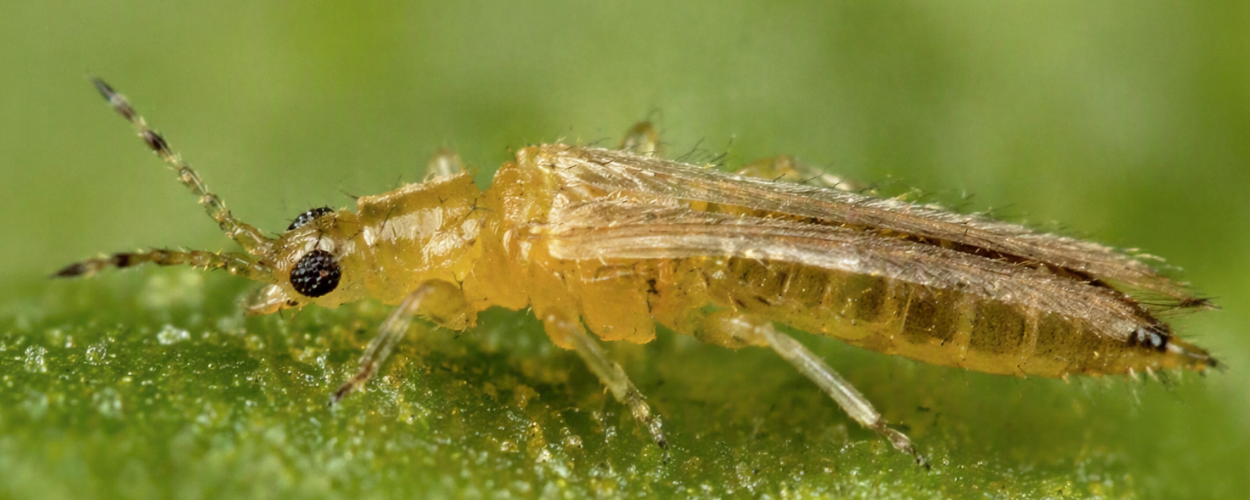
*For years, thrips have been one of the main concerns for greenhouse growers across Mexico. Their extremely small size, approximately 1.1 mm in males and up to 1.5 mm in females, allows them to go unnoticed with ease. In addition to reproducing rapidly, they can act as vectors of diseases that affect crop quality and yield.*
More recently, the detection of *Thrips Parvispinus* in northwestern Mexico, particularly in Sinaloa, has brought even greater attention to this challenge. While Mexican growers were already familiar with thrips species such as *Frankliniella Occidentalis*, the arrival of this new species has renewed the conversation around exclusion strategies inside the greenhouse.
With this in mind, one of the most common questions growers ask is: How can we reduce thrips entry into the greenhouse without affecting crop development?
The answer may seem simple. If a pest is very small, using an insect net with smaller holes may seem like the logical solution. But how small should those holes be? To answer that question, it is necessary to look at what happens inside the greenhouse.
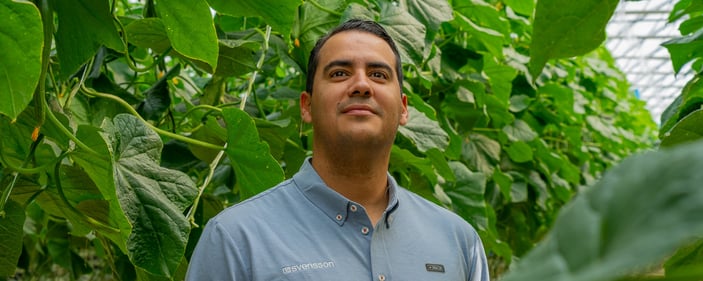
Every decision related to insect exclusion can also influence airflow, temperature, and humidity. For this reason, thrips exclusion is not only a plant health decision. It is also a climate decision.
**The Challenge Is Not Just About Excluding Insects**
Thrips represent a significant threat because they can damage leaves, flowers, and fruit while also contributing to the spread of diseases that affect crop quality and productivity.
At the same time, growers are facing an increasingly complex reality. Pest pressure can vary depending on the region, local climate conditions, and the crops grown around the greenhouse. In some cases, chemical control alone is no longer enough, or it may face increasing restrictions.
As a result, [insect exclusion nets](https://knowledge.ludvigsvensson.com/gl/xsect?hsLang=en)have become an important part of an integrated climate management strategy. However, when the goal is to exclude insects as small as thrips, another question naturally comes ups: What happens to the greenhouse climate when we reduce the size of the holes in a net?
**When airflow changes, greenhouse climate changes**
Air movement plays a fundamental role inside the greenhouse. It helps remove excess heat and contributes to creating more stable growing conditions. In addition, insect nets can also influence humidity levels inside the greenhouse. In some dry regions, they help retain humidity, which can be beneficial for the crop.
For this reason, exclusion decisions should not be evaluated only by their ability to keep insects out.
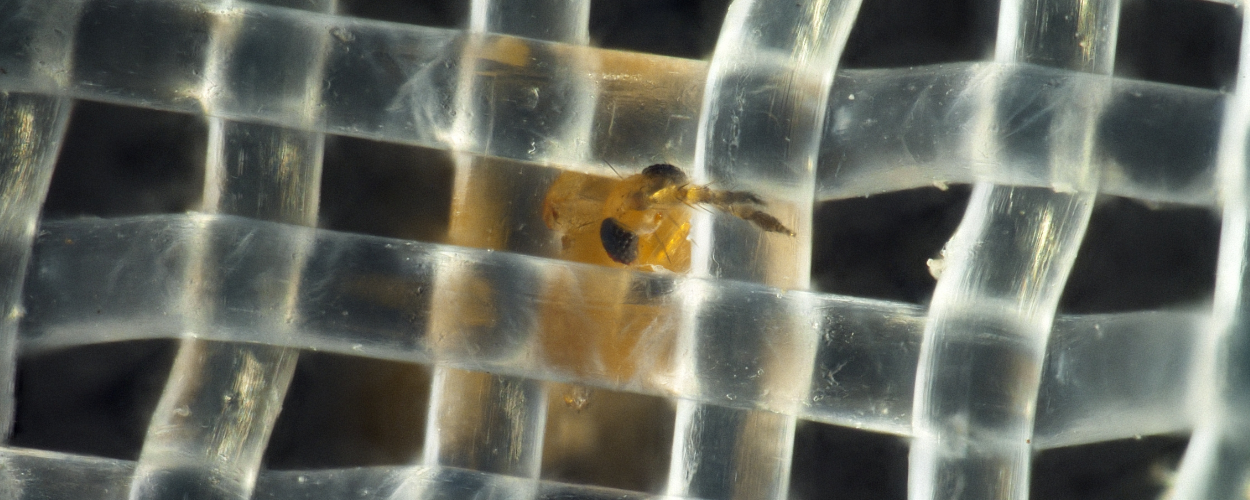
When ventilation is reduced, heat and water vapor have a harder time leaving the structure. In regions such as Guanajuato, Jalisco and Michoacán, where temperatures can remain high for much of the year, this can lead to greater heat accumulation and less air movement within the crop. What started as a decision to improve insect exclusion can also influence the conditions plants experience inside the greenhouse.
In crops such as peppers and cucumbers, these factors can directly affect crop development and fruit quality. That is why insect protection and climate management should be part of the same conversation.
**The Best Decision Depends on the Entire System**
One of the most important conclusions is that there is no single solution that works for every grower.
The answer will be different for every operation and depends on factors such as:
- Thrips pressure in the area
- The crop being grown
- Local climate conditions
- The type of greenhouse
- Available ventilation
In practice, growers do not make decisions about pests and climate separately. Both are connected, and understanding that relationship makes it easier to evaluate the impact of any change inside the greenhouse.
In many cases, the best decisions come from looking at the entire system rather than focusing on a single component.
**Looking beyond the pest**
New pest challenges have brought thrips back to the center of many technical discussions. However, experience from greenhouses in different regions shows that success does not depend only on keeping insects out.
The recent arrival of *Thrips parvispinus* is an example of how pest pressure continues to evolve. What works against one pest today may need to be adjusted tomorrow as new species emerge, pressure levels change, or growing conditions shift. Rather than looking for a single solution, it is becoming increasingly important to understand how crops, climate, and exclusion strategies interact inside the greenhouse.
It also depends on maintaining conditions that allow crops to develop consistently throughout the production cycle.
When we talk about thrips, it is easy to focus all our attention on the insect itself. However, the experience of many growers shows that the conversation is much broader.
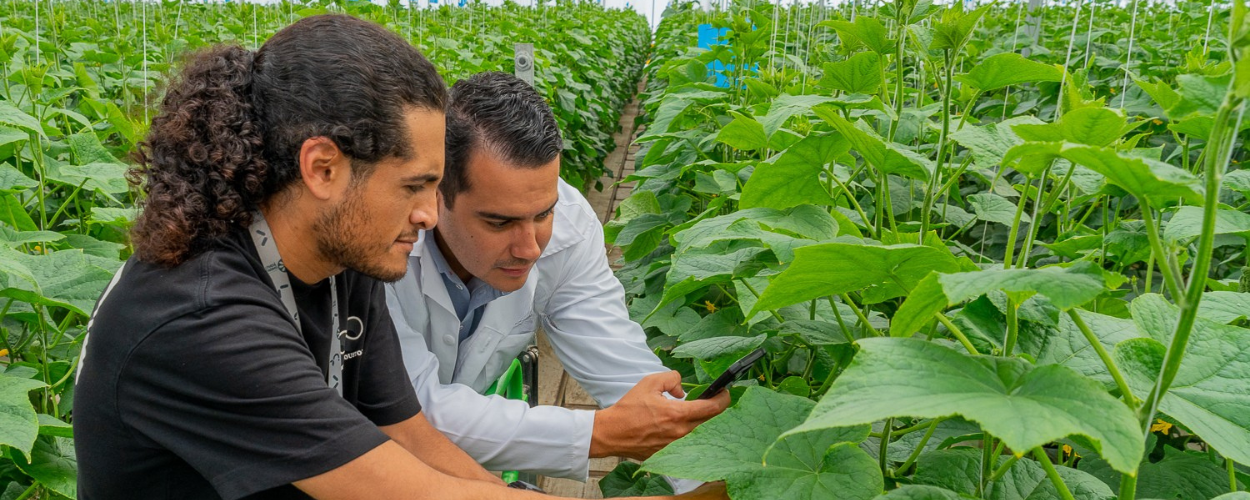
Decisions related to exclusion also influence the airflow, temperature, and humidity that crops experience every day.
Understanding that relationship helps growers make more informed decisions and develop climate strategies that respond to both pest pressure and the needs of the crop.
Ultimately, protecting a crop is not only about keeping certain insects out of the greenhouse. It is also about creating conditions that help plants grow and perform throughout the entire production cycle.
- [](https://cta-service-cms2.hubspot.com/web-interactives/public/v1/track/redirect?encryptedPayload=AVxigLJ37dsUNXsEoJctn3unHt%2B78UAOrbbhvRGEWhzZwvDARXFglTB%2BfVkD1HmC4wakjDvdnCJXjVqheu25ocgJBFesGDr7N4XDHVCnDahB802gYJF2IzbQUJH3%2FMi4rV7bO6QUpuADAYD0106ZYyhjYom5IA%3D%3D&webInteractiveContentId=152441460051&portalId=7329237)
-
-
- [mailto:?subject=https://knowledge.ludvigsvensson.com/en/warmzones/beyond-exclusion-what-growers-should-consider-when-facing-thrips](mailto:?subject=https://knowledge.ludvigsvensson.com/en/warmzones/beyond-exclusion-what-growers-should-consider-when-facing-thrips)
### Related articles
[](https://knowledge.ludvigsvensson.com/en/warmzones/temperature-up-humidity-up-whitefly-up-a-perfect-time-to-test-insect-nets-in-western-mexico?hsLang=en)
Climate screens / [Insect control](https://knowledge.ludvigsvensson.com/en/warmzones/tag/insect-control), [Testimonials](https://knowledge.ludvigsvensson.com/en/warmzones/tag/testimonials), [Tomato](https://knowledge.ludvigsvensson.com/en/warmzones/tag/tomato), [Temperature](https://knowledge.ludvigsvensson.com/en/warmzones/tag/temperature), [Insect nets](https://knowledge.ludvigsvensson.com/en/warmzones/tag/insect-nets), [Insects](https://knowledge.ludvigsvensson.com/en/warmzones/tag/insects)
## [Temperature up, humidity up, whitefly up: A perfect time to test insect nets in Western Mexico](https://knowledge.ludvigsvensson.com/en/warmzones/temperature-up-humidity-up-whitefly-up-a-perfect-time-to-test-insect-nets-in-western-mexico?hsLang=en)
“It’s 50 degrees in the greenhouse.” We know hot weather in Mexico, but when we hear those words in a phone call from a customer it conjures up a..
[Read more](https://knowledge.ludvigsvensson.com/en/warmzones/temperature-up-humidity-up-whitefly-up-a-perfect-time-to-test-insect-nets-in-western-mexico?hsLang=en)

**Héctor Parra**
28 August 2025
Read time: 2 minutes
[](https://knowledge.ludvigsvensson.com/en/warmzones/es/warmzones/how-an-insect-control-net-affects-greenhouse-climate?hsLang=en)
Climate screens / [Humidity Control](https://knowledge.ludvigsvensson.com/en/warmzones/tag/humidity-control), [Climate Control](https://knowledge.ludvigsvensson.com/en/warmzones/tag/climate-control), [Temperature](https://knowledge.ludvigsvensson.com/en/warmzones/tag/temperature), [Insect nets](https://knowledge.ludvigsvensson.com/en/warmzones/tag/insect-nets), [Insects & Pests](https://knowledge.ludvigsvensson.com/en/warmzones/tag/insects-pests)
## [How an insect control net affects greenhouse climate](https://knowledge.ludvigsvensson.com/en/warmzones/es/warmzones/how-an-insect-control-net-affects-greenhouse-climate?hsLang=en)
In greenhouses located in warm climate zones, one of the main challenges is managing temperature, humidity, and ventilation conditions inside the..
[Read more](https://knowledge.ludvigsvensson.com/en/warmzones/es/warmzones/how-an-insect-control-net-affects-greenhouse-climate?hsLang=en)

**Héctor Parra**
02 March 2026
Read time: 2 minutes

Ludvig Svensson
**Headquartered in Sweden**
**with an expansive global presence**
[About Us](https://www.ludvigsvensson.com/en/about-us/)
[Work With Us](https://www.ludvigsvensson.com/en/work-with-us/)
[Ludvigson Invest](https://www.ludvigsoninvest.com/)
- [facebook](https://www.facebook.com/SvenssonClimateScreens/)
- [linkedin](https://www.linkedin.com/showcase/svensson-climate-screens)
- [youtube](https://www.youtube.com/channel/UCAwK7gRWYnrmokIp7SlxEqA)
- #### **Climate Technologies**
- [People](https://www.ludvigsvensson.com/en-us/climate-screens/people)
- [Know-how](https://www.ludvigsvensson.com/en-us/climate-screens/know-how)
- [Grower stories](https://www.ludvigsvensson.com/en-us/climate-screens/grower-stories)
- [Products](https://www.ludvigsvensson.com/en-us/climate-screens/product-portfolio)
- [Contact](https://www.ludvigsvensson.com/en-us/climate-screens/contact)
```json
{
"@context" : "https://schema.org",
"@type" : "BlogPosting",
"author" : {
"@type" : "Person",
"name" : "Alán Falomir",
"url" : "https://knowledge.ludvigsvensson.com/en/warmzones/author/alan-falomir"
},
"dateModified" : "2026-08-18T15:05:23.638Z",
"datePublished" : "2026-08-18T15:05:23.000Z",
"headline" : "Beyond exclusion: What growers should consider when facing thrips",
"image" : [ "https://knowledge.ludvigsvensson.com/hubfs/Banner_August_blog_2026.png" ],
"mainEntityOfPage" : {
"@id" : "https://knowledge.ludvigsvensson.com/en/warmzones/beyond-exclusion-what-growers-should-consider-when-facing-thrips",
"@type" : "WebPage"
},
"publisher" : {
"@type" : "Organization",
"logo" : {
"@type" : "ImageObject",
"url" : "https://knowledge.ludvigsvensson.com/hubfs/LOGO_SVENSSON_ORIGINAL_2014-1.png"
},
"name" : "Ludvig Svensson AB"
}
}
```