---
title: Is your pepper crop receiving the light it needs, when it needs it?
description: Learn how observing the crop, measuring leaf temperature, and adjusting shading can support a more responsive light management strategy in peppers.
image: https://knowledge.ludvigsvensson.com/hubfs/Blog_October_Peppers_Light.png
---
- [Svensson Group](https://www.ludvigsvensson.com/en-gb)
- [Climate Screens](https://www.ludvigsvensson.com/en-us/climate-screens)
- [INTERIOR TEXTILES](https://www.ludvigsvensson.com/en/interior-textiles)
[](https://www.ludvigsvensson.com/en-us/climate-screens)
[](https://www.ludvigsvensson.com/en/checkout/)
Menu
-
- [Products](https://www.ludvigsvensson.com/en-us/climate-screens/product-portfolio)
- [Grower stories](https://www.ludvigsvensson.com/en-us/climate-screens/grower-stories)
- Insights
- [Crop tips](https://www.ludvigsvensson.com/en-us/climate-screens/crop-cultivation-tips)
- [Climate challenges](https://www.ludvigsvensson.com/en-us/climate-screens/climate-challenges)
- [Maintenance](https://www.ludvigsvensson.com/en-us/climate-screens/installation-maintenance/climate-screens-maintenance)
- Installation
- [Highlights](https://www.ludvigsvensson.com/en-us/climate-screens/highlights)
- [Contacts](https://www.ludvigsvensson.com/en-us/climate-screens/contact)
*Expand Search*
en
- [English](https://www.ludvigsvensson.com/en/climate-screens/)
- [Deutsch](https://www.ludvigsvensson.com/de/climate-screens/)
- [Nederlands](https://www.ludvigsvensson.com/nl/climate-screens/)
- [한국어](https://www.ludvigsvensson.com/ko/환경제어-스크린/)
- [中文](https://www.ludvigsvensson.com/cn/气候调节幕布/)
- [Русский](https://www.ludvigsvensson.com/ru/climate-screens/)
- [Español](https://www.ludvigsvensson.com/es/pantallas-climaticas/)
[](https://www.ludvigsvensson.com/en/checkout/)
Menu
-
1. [Warmzones Growers' Blog](https://knowledge.ludvigsvensson.com/en/warmzones)
2. Is your pepper crop receiving the light it needs, when it needs it?
[Warmzones Growers' Blog](https://knowledge.ludvigsvensson.com/en/warmzones) / [Pepper](https://knowledge.ludvigsvensson.com/en/warmzones/tag/pepper) / [Climate Control](https://knowledge.ludvigsvensson.com/en/warmzones/tag/climate-control) / [Light Control](https://knowledge.ludvigsvensson.com/en/warmzones/tag/light-control) / [Temperature](https://knowledge.ludvigsvensson.com/en/warmzones/tag/temperature) / [Climate screens](https://knowledge.ludvigsvensson.com/en/warmzones/tag/climate-screens) / [Radiation](https://knowledge.ludvigsvensson.com/en/warmzones/tag/radiation)
# Is your pepper crop receiving the light it needs, when it needs it?
5 minutes
[**Héctor Parra**](https://knowledge.ludvigsvensson.com/en/warmzones/author/hector-parra)
20 October 2026
*In pepper production, light management requires finding a balance between reducing light intensity on days with higher light levels and allowing the plant to use the light it needs, when it needs it. Knowing when to increase the level of shading and when to allow light into the greenhouse is part of a climate strategy that responds to the needs of the crop.*
In our work with pepper growers, we see that light levels and the temperature around the plant change throughout the day. As a result, a strategy that works during the most intense hours may not respond in the same way when conditions inside the greenhouse change.
One of the first questions we need to ask is not only how much we are reducing the crop’s exposure, but also whether we are allowing it to use the available light when it needs it.
**Peppers need light, but not always in the same way**
**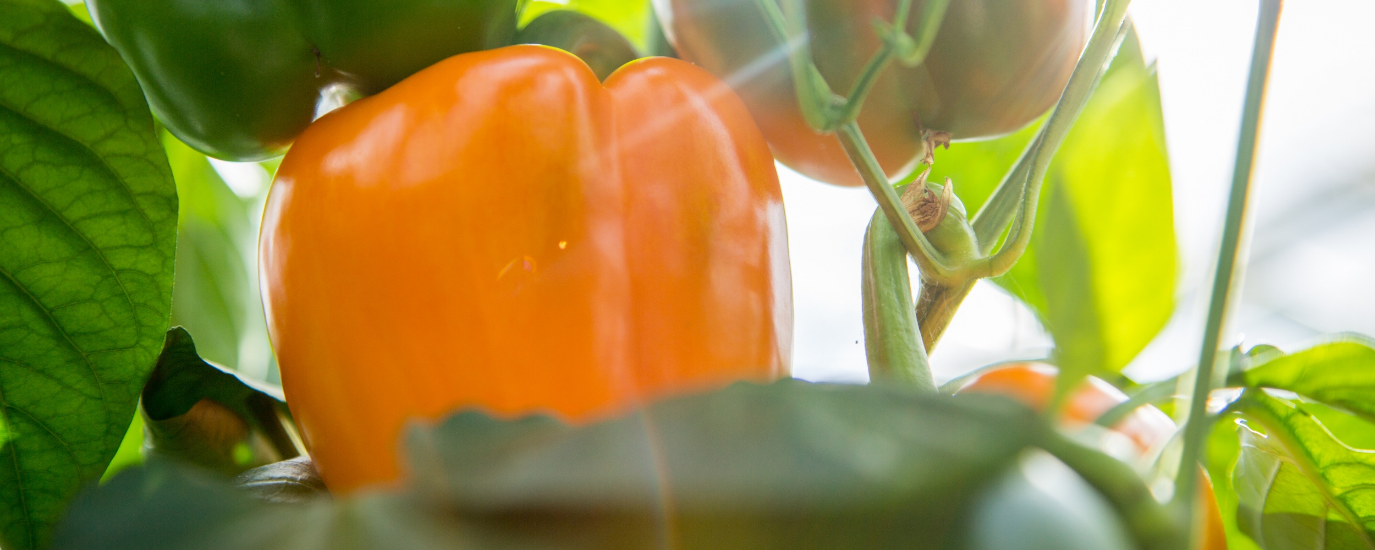**
Light provides the energy the plant uses to grow and develop. However, during the most intense hours, it can also increase leaf temperature and create conditions that stress the plant.
Finding a balance does not mean choosing between shading the crop and allowing all the light to enter. It means understanding what the plant needs at each stage and adjusting the management strategy according to the conditions inside the greenhouse.
During my visits to growers, I see that not all pepper varieties respond in the same way. Plant vigor, crop balance, the stage of the growing cycle, and production goals all influence how much light the crop can use. For this reason, maintaining the same level of shading throughout the entire cycle may not respond to every situation. The crop should always be our starting point.
**When conditions change, management can change too**
Light intensity in the morning is not the same as it is at midday. It also behaves differently on a clear day than on a partly cloudy one. A fixed shading method misses opportunities to make greater use of natural light.
During the most intense hours, reducing light exposure can help maintain a better temperature around the plant. Later, when light levels are lower, keeping the same level of shading can restrict light that the crop could still use.
This is the difference between simply creating shade and managing light.
A more dynamic approach allows us to decide when to adjust the screen, how long to keep it closed, and when to open it to allow light into the greenhouse. It is not about moving the screen without a defined strategy, but about connecting that decision to what is happening inside the greenhouse.
In this way, shading stops being a fixed condition and becomes a decision that responds to the crop.
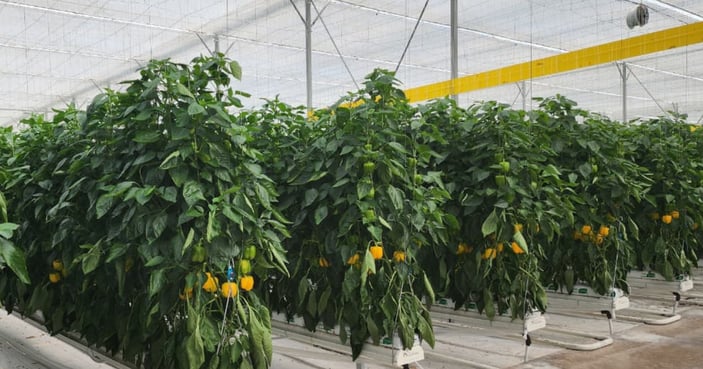
**Observing the plant helps us make better decisions**
Climate measurements provide important information, but we also need to observe what is happening in the plant. Air temperature does not always reflect what the leaves are experiencing, especially during periods of higher solar intensity.
What we want to understand is how the crop is responding. Observing its growth helps us interpret the data more effectively. By relating the measurements to what we see in the crop, we can determine whether the strategy is creating the climate we are looking for or whether it needs to be adjusted.
[We can see an example of this approach at Cimarrón,](https://www.ludvigsvensson.com/en-us/climate-technologies/grower-stories/2026/beyond-shading-a-technology-for-creating-better-climate-conditions-for-the-crop) a pepper operation in San Felipe, Guanajuato, where my colleague Alán Falomir provided guidance before and during the installation of the climate screens. In this project, Carlos Borja, Head Grower at Cimarrón, uses leaf temperature sensors to compare air conditions with what the plant is actually experiencing. He also adapts the management of the Harmony screen according to the characteristics of the different varieties growing in the greenhouse.
After working for many years with and without screens, Carlos Borja summarizes his experience simply:
“I strongly believe that a screen is a tool.”
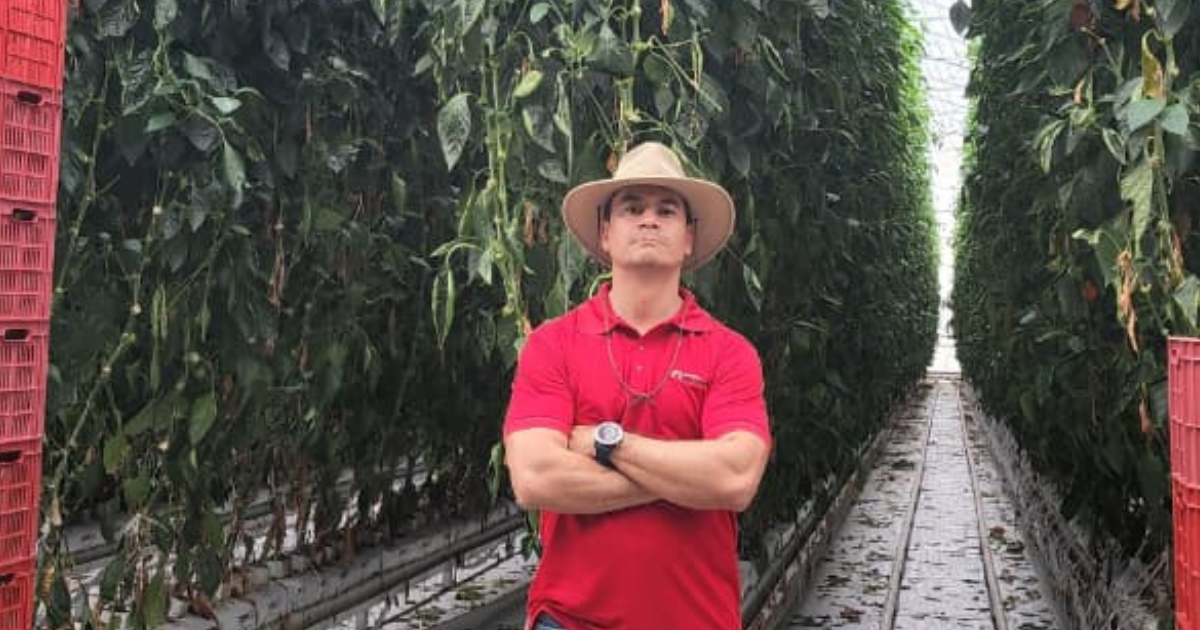
In the image above, we see Carlos Borja, Head Grower at Cimarrón, at the pepper operation in San Felipe, Guanajuato, where climate screens are part of the light management strategy.
This quote summarizes how we should understand this technology. A climate screen does not replace the grower’s knowledge; it enhances it. By providing greater control over the climate, it supports the implementation of more precise agronomic strategies aligned with the needs of the crop.
**Understanding how light reaches the crop**
When I look at a shading strategy, I do not focus only on how much light reaches the crop. I also want to understand how that light reaches the plant and what happens in different parts of the crop.
Two materials with similar shading percentages can behave differently inside the greenhouse. Direct light tends to be concentrated on the most exposed areas, while diffuse light can be distributed across different parts of the plant. For this reason, the shading percentage is only one part of the decision.
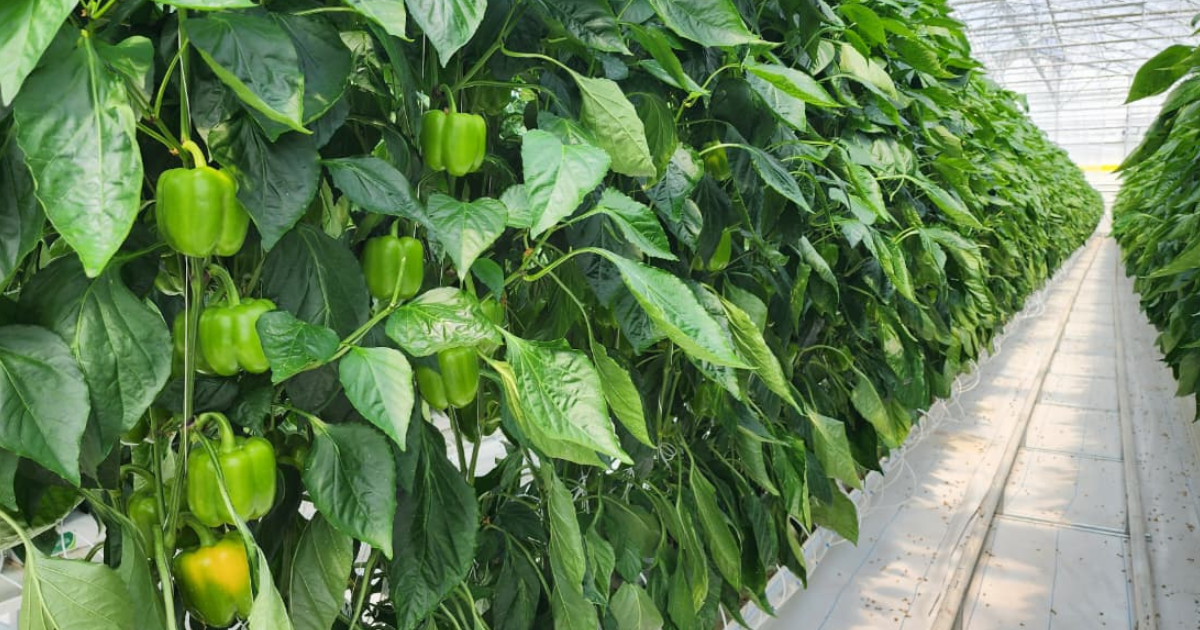
Within this approach, a movable high-diffusion screen such as Harmony OE makes it possible to adjust shading during the most intense hours and distribute the light entering the greenhouse. As the climate changes, the screen can be opened to allow more light to reach the crop.
**Observe, measure, and adjust**
One of the first questions I ask when I begin working on a project is: What do we want to achieve? The answer may vary depending on the variety, the stage of the growing cycle, and the specific conditions in each greenhouse.
So, how do we know whether a pepper crop is receiving the light it needs at the right time? Observing the plant gives us a first sign, while light and leaf temperature measurements complement that observation. There is no fixed amount of light that works for every hour of the day, every stage of the crop, or every variety. The answer lies in connecting the data with what we observe in the crop.
From my experience, the next step does not necessarily involve creating more shade. First, we need to understand what is happening inside the greenhouse, what the crop needs, and how the region’s climate conditions influence the conditions inside the greenhouse. From there, we can adjust the management strategy so the plant can use the available light without being exposed to conditions that could compromise its development.
- [](https://cta-service-cms2.hubspot.com/web-interactives/public/v1/track/redirect?encryptedPayload=AVxigLJ37dsUNXsEoJctn3unHt%2B78UAOrbbhvRGEWhzZwvDARXFglTB%2BfVkD1HmC4wakjDvdnCJXjVqheu25ocgJBFesGDr7N4XDHVCnDahB802gYJF2IzbQUJH3%2FMi4rV7bO6QUpuADAYD0106ZYyhjYom5IA%3D%3D&webInteractiveContentId=152441460051&portalId=7329237)
-
-
- [mailto:?subject=https://knowledge.ludvigsvensson.com/en/warmzones/is-your-pepper-crop-receiving-the-light-it-needs-when-it-needs-it](mailto:?subject=https://knowledge.ludvigsvensson.com/en/warmzones/is-your-pepper-crop-receiving-the-light-it-needs-when-it-needs-it)
### Related articles
[](https://knowledge.ludvigsvensson.com/en/warmzones/what-if-you-know-your-warmzone-climate-but-you-change-to-a-new-pepper-crop?hsLang=en)
Climate screens / [Pepper](https://knowledge.ludvigsvensson.com/en/warmzones/tag/pepper), [Climate Control](https://knowledge.ludvigsvensson.com/en/warmzones/tag/climate-control), [Temperature](https://knowledge.ludvigsvensson.com/en/warmzones/tag/temperature), [Climate screens](https://knowledge.ludvigsvensson.com/en/warmzones/tag/climate-screens)
## [What if you know your warmzone climate, but you change to a new pepper crop?](https://knowledge.ludvigsvensson.com/en/warmzones/what-if-you-know-your-warmzone-climate-but-you-change-to-a-new-pepper-crop?hsLang=en)
Why show up at greenhouses in Almeria with all my gadgets? The grower’s know the outdoor climate after all. What’s the point in gathering that data..
[Read more](https://knowledge.ludvigsvensson.com/en/warmzones/what-if-you-know-your-warmzone-climate-but-you-change-to-a-new-pepper-crop?hsLang=en)

**Nelson Pérez**
30 September 2024
Read time: 5 minutes
[](https://knowledge.ludvigsvensson.com/en/warmzones/blazing-hot-by-day-but-freezing-at-night?hsLang=en)
Climate screens / [Pepper](https://knowledge.ludvigsvensson.com/en/warmzones/tag/pepper), [Testimonials](https://knowledge.ludvigsvensson.com/en/warmzones/tag/testimonials), [Temperature](https://knowledge.ludvigsvensson.com/en/warmzones/tag/temperature), [Climate screens](https://knowledge.ludvigsvensson.com/en/warmzones/tag/climate-screens)
## [Blazing hot by day but freezing at night](https://knowledge.ludvigsvensson.com/en/warmzones/blazing-hot-by-day-but-freezing-at-night?hsLang=en)
How fixing a customer's problem turned us into night-time heat loss science nerds
[Read more](https://knowledge.ludvigsvensson.com/en/warmzones/blazing-hot-by-day-but-freezing-at-night?hsLang=en)

**Nelson Pérez**
17 April 2024
Read time: 8 minutes

Ludvig Svensson
**Headquartered in Sweden**
**with an expansive global presence**
[About Us](https://www.ludvigsvensson.com/en/about-us/)
[Work With Us](https://www.ludvigsvensson.com/en/work-with-us/)
[Ludvigson Invest](https://www.ludvigsoninvest.com/)
- [facebook](https://www.facebook.com/SvenssonClimateScreens/)
- [linkedin](https://www.linkedin.com/showcase/svensson-climate-screens)
- [youtube](https://www.youtube.com/channel/UCAwK7gRWYnrmokIp7SlxEqA)
- #### **Climate Technologies**
- [People](https://www.ludvigsvensson.com/en-us/climate-screens/people)
- [Know-how](https://www.ludvigsvensson.com/en-us/climate-screens/know-how)
- [Grower stories](https://www.ludvigsvensson.com/en-us/climate-screens/grower-stories)
- [Products](https://www.ludvigsvensson.com/en-us/climate-screens/product-portfolio)
- [Contact](https://www.ludvigsvensson.com/en-us/climate-screens/contact)
```json
{
"@context" : "https://schema.org",
"@type" : "BlogPosting",
"author" : {
"@type" : "Person",
"name" : "Héctor Parra",
"url" : "https://knowledge.ludvigsvensson.com/en/warmzones/author/hector-parra"
},
"dateModified" : "2026-10-20T15:01:47.470Z",
"datePublished" : "2026-10-20T15:01:47.000Z",
"headline" : "Is your pepper crop receiving the light it needs, when it needs it?",
"image" : [ "https://knowledge.ludvigsvensson.com/hubfs/Blog_October_Peppers_Light.png" ],
"mainEntityOfPage" : {
"@id" : "https://knowledge.ludvigsvensson.com/en/warmzones/is-your-pepper-crop-receiving-the-light-it-needs-when-it-needs-it",
"@type" : "WebPage"
},
"publisher" : {
"@type" : "Organization",
"logo" : {
"@type" : "ImageObject",
"url" : "https://knowledge.ludvigsvensson.com/hubfs/LOGO_SVENSSON_ORIGINAL_2014-1.png"
},
"name" : "Ludvig Svensson AB"
}
}
```